
Start with the filament maker’s drying schedule
These examples apply only to the named product lines. A dryer’s maximum temperature is not a schedule for every filament. Follow the spool label and dryer manual if either gives a different limit.
| Exact product line | Published schedule | Source |
|---|---|---|
| ELEGOO Rapid PETG | 60°C for 8 hours | ELEGOO product page |
| Bambu TPU for AMS | 70°C for 8 hours in a forced-air oven | Bambu drying chart |
| OVERTURE High Speed PETG | 60°C for 5 hours | OVERTURE product page |
| OVERTURE High Speed PLA | 50°C for 7 hours | OVERTURE product page |
| SUNLU standard PLA | PLA/PLA+ chart: 50–55°C for 6–8 hours. The standard PLA product page does not list a drying time. | SUNLU drying chart |
For cardboard-spool measurements and dryer handling, read the AMS, AMS Lite, and heated dryer spool guide. For storage after drying, see the vacuum storage and desiccant guide. For a Bambu A1 and AMS Lite, see whether you need a separate dryer. For SUNLU S4 models, compare S4 and S4 Pro.
Use the filament maker’s drying schedule. Choose a dryer that can reach that temperature and fit the spool. A sealed box or bag is for storing a dry spool, not drying a wet one.
Start with these four
These picks cover four-spool and two-spool capacity, plus drying followed by sealed storage.
- Creality Space Pi X4 — four spools when its manufacturer-listed 45–85°C range fits your material schedule.
- SUNLU S4 standard — four spools in the manufacturer’s 70°C class.
- Creality Space Pi Plus — two spools in a 45–70°C range.
- Polymaker PolyDryer complete system — dry a spool, then keep that same spool in the included sealed box.
The full catalog: nine dryer and storage models
Several spools at once
Use a multi-spool unit when you keep several rolls on deck. The Space Pi X4 and SUNLU S4 each hold four spools; the Creality Space Pi Plus holds two and has a 45–70°C range. The X4 is the option here whose manufacturer page lists 85°C. SUNLU S4 Pro is a separate model with two independently controlled 45–85°C chambers; see the S4 vs S4 Pro comparison.
Confirm the selected product and seller on the retailer page. As an Amazon Associate, FilamentSetup earns from qualifying purchases. See our disclosure and how we assess products.
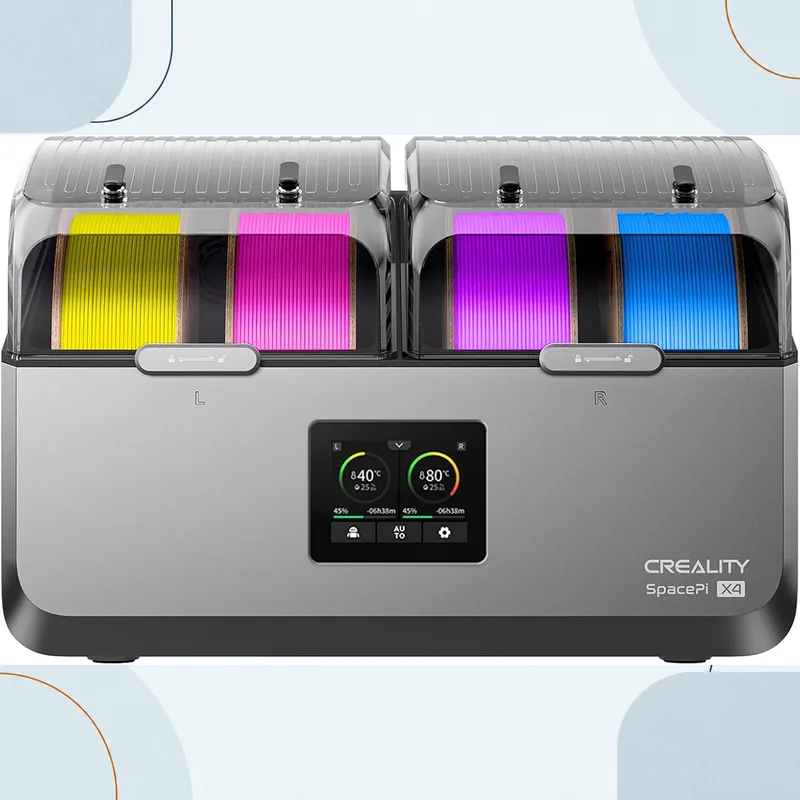
Four-spool, higher-temperature range
Creality Space Pi X4 Filament Dryer, four-spool, dual chamber
Skip this if: the exact US child changes brand, model or line, material or capacity, diameter or weight, color, or generation.
View on Amazon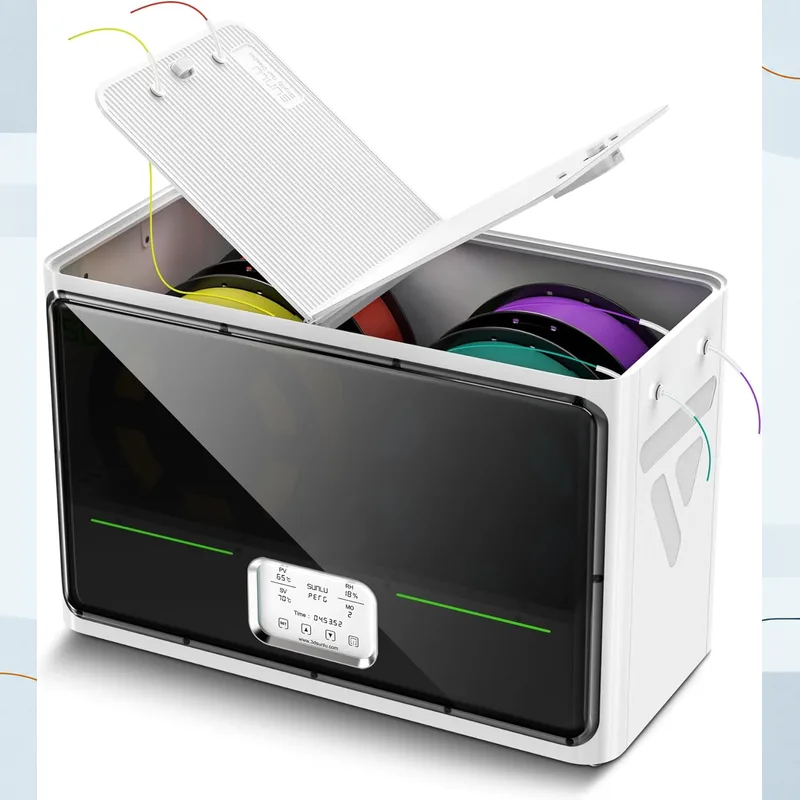
Four-spool, 70°C class
SUNLU S4 standard Filament Dryer, white, four-spool
Skip this if: the exact US child changes brand, model or line, material or capacity, diameter or weight, color, or generation.
View on Amazon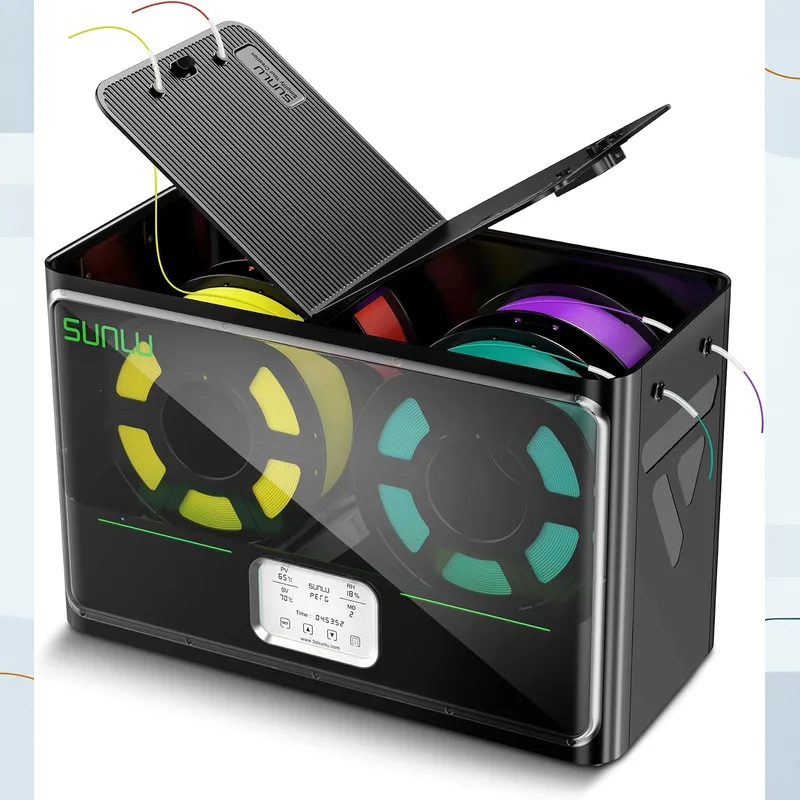
Four-spool, 70°C class
SUNLU S4 standard Filament Dryer, black, four-spool
Skip this if: the exact US child changes brand, model or line, material or capacity, diameter or weight, color, or generation.
View on Amazon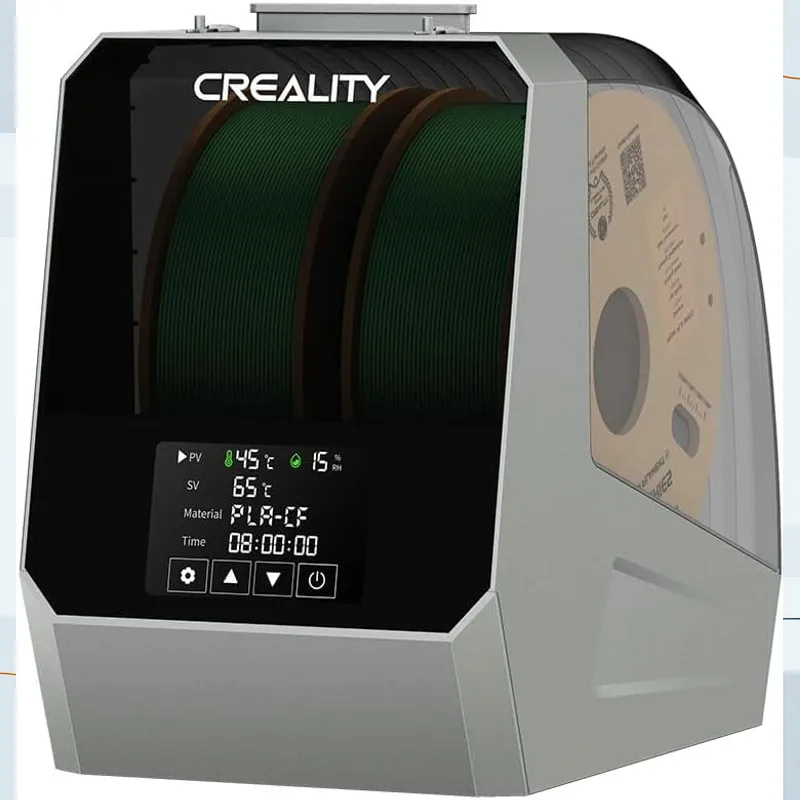
Two-spool, 45–70°C range
Creality Space Pi Plus Filament Dryer, two-spool
Skip this if: your material schedule exceeds 70°C or you need four-spool capacity.
View on AmazonCreality’s Space Pi X4 page specifies dual independent chambers, active dehumidification, and spool diameter ≤200 mm / width ≤150 mm. SUNLU’s S4 page describes the standard four-spool, 70°C class. Creality’s Space Pi Plus manual lists two-spool capacity and a 45–70°C range. Check the selected listing’s model, color, and generation before ordering.
For the complete four-spool head-to-head, read Creality Space Pi X4 vs. SUNLU FilaDryer S4.
Dry, then store
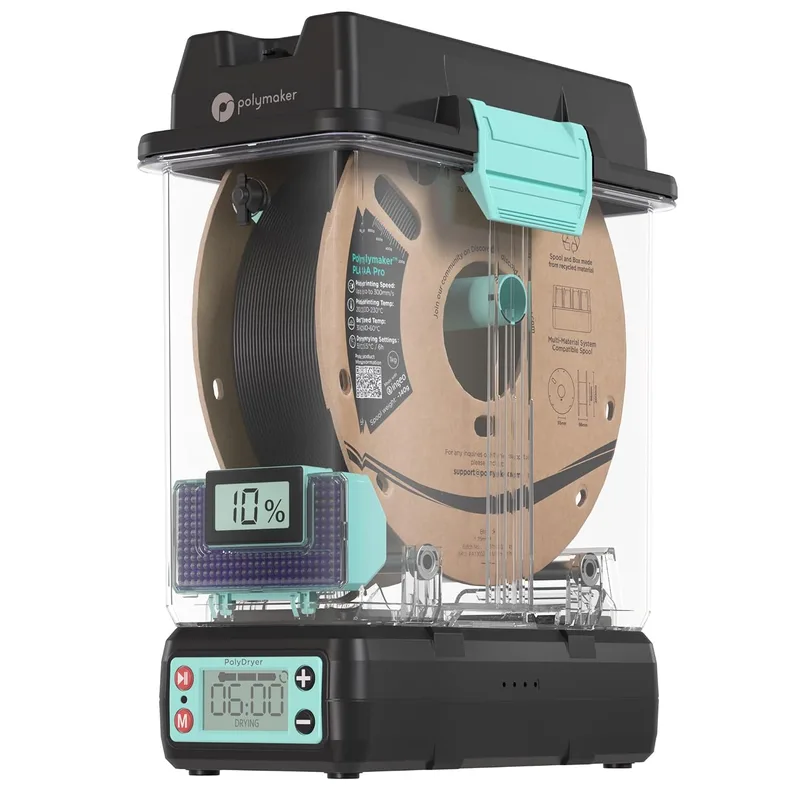
Choose PolyDryer if you want to dry a spool and then store it in the included sealed box. The complete system includes the dock and box; the dock-only accessory is a separate listing.
Dry, then store
Polymaker PolyDryer complete system, dock and storage box
Skip this if: the exact US child changes brand, model or line, material or capacity, diameter or weight, color, or generation.
View on AmazonPolymaker’s PolyDryer wiki describes modular sealed boxes, three power levels, and a separate XL box for 3 kg spools. Confirm the Amazon bundle includes the box, not only the dock. Do not treat hygrometer RH as a measured moisture content.
Check the differences between the complete system, 1 kg box, and XL in our PolyDryer package comparison.
Bambu AMS lid upgrade
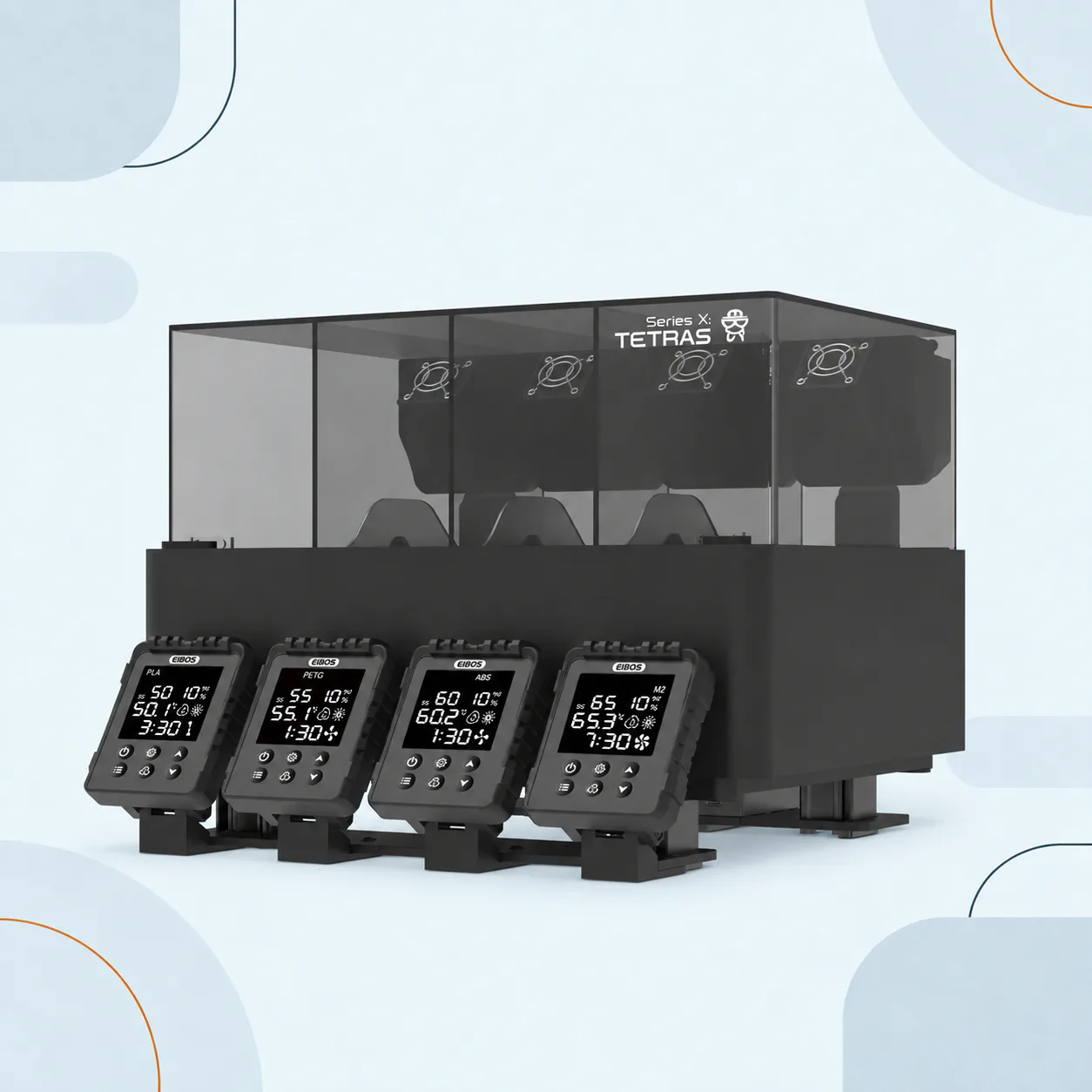
Tetras replaces the AMS lid with four independently controlled chambers. EIBOS sells it from its store, not as a FilamentSetup Amazon ASIN. It is an AMS add-on, not a standalone dryer for a printer without AMS.
AMS 1 or AMS 2 Pro
EIBOS Tetras AMS dryer, four chambers
Skip this if: the official route changes the model or package you need.
View at EIBOSEIBOS states Tetras/Dyas fit Bambu Lab AMS 1 and AMS 2 Pro, with a self-printed adapter required for AMS 2 Pro. Temperature is capped at 65°C to protect the AMS chassis. Ordinary TPU 95A still does not belong in AMS lite; Tetras does not change that feeder rule.
One spool at a time
Use a single-spool 70°C box when you dry one roll at a time. These are print-through dryers first. They are not a substitute for a gasketed storage box after you power them down.
One spool at a time
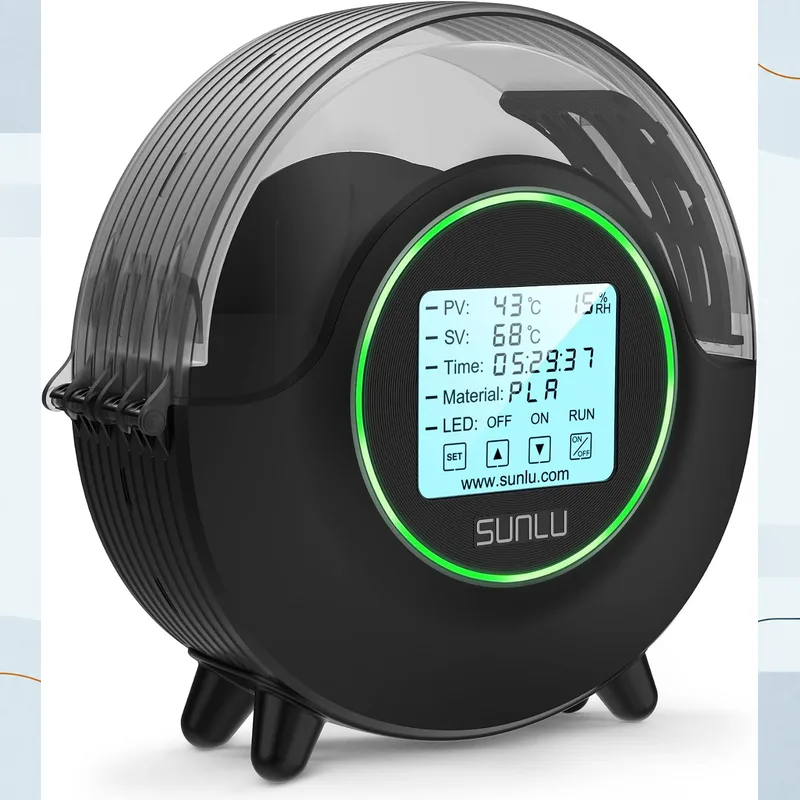
SUNLU FilaDryer S2, single-spool
Skip this if: the exact US child changes brand, model or line, material or capacity, diameter or weight, color, or generation.
View on Amazon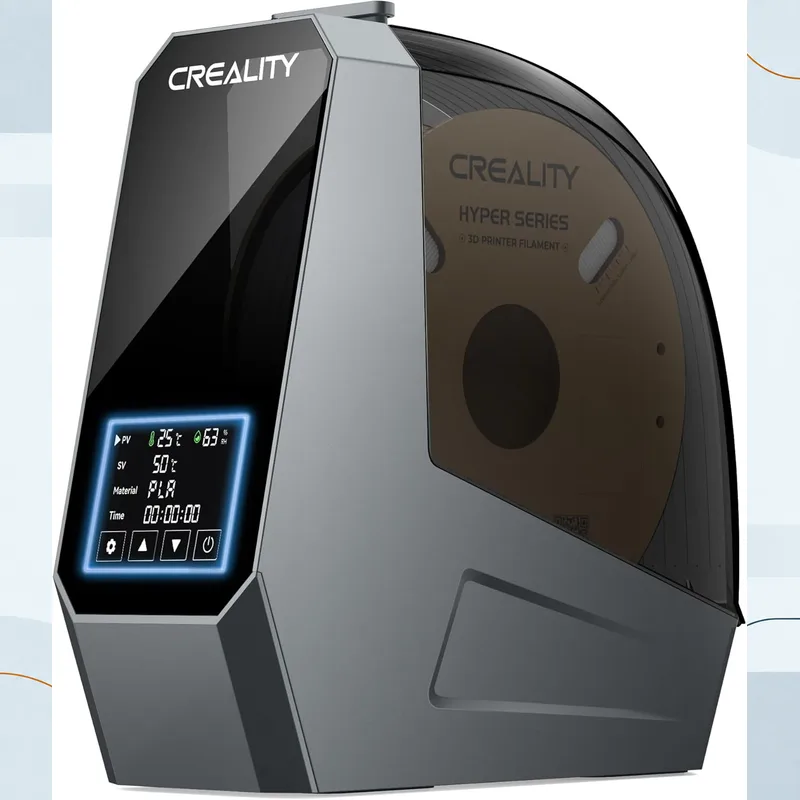
One spool at a time
Creality Space Pi Filament Dryer, single-spool
Skip this if: the exact US child changes brand, model or line, material or capacity, diameter or weight, color, or generation.
View on AmazonSUNLU’s S2 page lists 70°C and 48 W. Creality’s Space Pi page lists 45–70°C. The product page describes a supported outlet; use separate sealed storage if the spool will sit idle after drying. Do not use those 70°C ceilings as a nylon/PA-CF recovery promise.
For a direct comparison of the one- and two-spool models, see SUNLU S2 vs. Creality Space Pi, Space Pi Plus, and Polyphemus.
3 kg spools
Polyphemus is the 3 kg path in this catalog because of its rotating spool and optional expansion parts. Confirm the Amazon listing includes the 3 kg kit if that is why you are buying it.
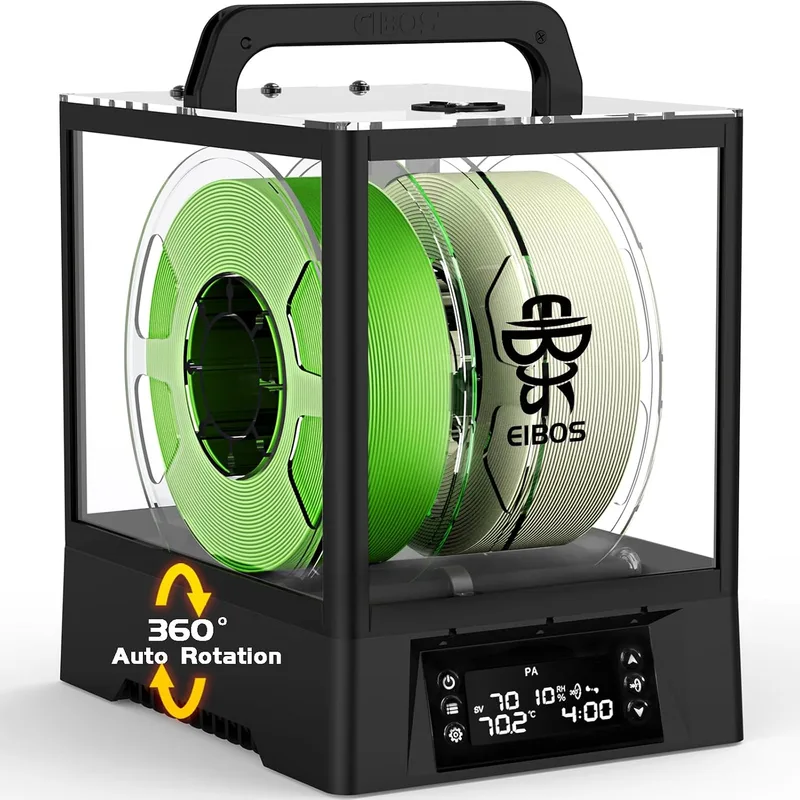
3 kg spool path
EIBOS Polyphemus filament dryer, rotary
Skip this if: the exact US child changes brand, model or line, material or capacity, diameter or weight, color, or generation.
View on AmazonEIBOS’s Polyphemus page lists 130 W, adjustable exhaust, a rotating motor, and 3 kg capacity after expansion parts that grow the opening to about ø250 × 170 mm. Bundle contents on Amazon are unknown until you check the selected variant. The manufacturer describes rotation as part of its airflow design; use the published range and follow the spool maker’s schedule.
Measure a large reel against the published limits and use the 3 kg drying and feeding setup guide.
| Check | What the maker states | Unknown here |
|---|---|---|
| Space Pi X4 | Four spools, 45–85°C, dual chambers, 360 W rated. | Whether the live Amazon child matches this generation. |
| SUNLU S4 | Four 1 kg spools, 70°C, circulating fans and humidity-control mode. | Whether the selected child remains the same color and generation. |
| Creality Space Pi Plus | Two spools, 45–70°C, double PTC 360° hot-air heating. | Whether the selected child matches the model in Creality’s manual. |
| PolyDryer | 68 W dock, three power levels, sealed box, 1 kg-class original box. | Dock-only vs complete-system bundle on the selected child. |
| Tetras | Four 60 W chambers, 20–65°C, AMS 1 / AMS 2 Pro. | The listed specifications do not give a nylon drying time. |
| S2 / Space Pi | Single spool, 70°C class, circulating / PTC air. | Sealed-storage performance after power-off. |
| Polyphemus | 130 W, 30–80°C, rotation, 3 kg with expansion kit. | Whether the Amazon SKU includes that kit. |
Confirm the selected product and seller on the retailer page. As an Amazon Associate, FilamentSetup earns from qualifying purchases. See our disclosure and how we assess products. Tetras links to EIBOS.
Which path sounds like your situation?
Choose by spool count, whether you need sealed storage after the cycle, and whether the unit can reach the temperature your filament maker specifies.
| Your job | Start with | Skip when |
|---|---|---|
| Several 1 kg spools, mixed materials | Space Pi X4 or SUNLU S4 · comparison | You only dry one roll now and then. |
| Two spools within a 45–70°C schedule | Creality Space Pi Plus | You need four-spool capacity or a schedule above 70°C. |
| Dry, then keep the same spool sealed | PolyDryer complete system · box options | You only need the dock, or you need 3 kg in the original box. |
| Bambu AMS lid upgrade | EIBOS Tetras, official store | You do not have AMS 1 or AMS 2 Pro. |
| One spool at a time | SUNLU S2 or Space Pi · comparison | You need 85°C engineering temps or 3 kg spools. |
| 3 kg spools | EIBOS Polyphemus · 3 kg setup | Your spools already fit a 1 kg dryer and you do not need rotation. |
Drying and storage
Filament can absorb moisture from room air. Moisture may contribute to popping, pockmarks, stringing, or weak layer bonds, but printer settings and the feed path can cause similar symptoms. Prusa’s drying guide covers these signs; also check the exact PETG, TPU, or ASA profile.
Follow the dryer manual for its airflow and vent settings. Use the filament maker’s schedule, and stay within the spool’s heat limit.
A vacuum bag or sealed box stores a spool after drying; it does not replace a drying cycle. Prusa recommends drying moist filament first, then storing it in a closed box with desiccant. See Prusa’s drying guidance.
Stay below the spool’s heat limit and use the filament maker’s drying temperature. Creality warns that high-temperature drying must consider spool heat resistance. Polymaker uses three power levels rather than a single universal chamber setpoint; temperature varies around the spool.
Do I need a dryer for PLA?
Usually no. If sealed PLA prints cleanly and the spool is not brittle or noisy, storage with desiccant is enough. Use a dryer when the exact maker schedule calls for it or repeatable moisture symptoms remain after the profile, first layer, nozzle, and feed path are known good. The schedule table above includes two product-specific PLA examples.
AMS stores filament; it does not dry it
If an AMS humidity reading stays high after adding silica, separate the questions. Check whether the desiccant is saturated, whether the spool is already wet, and whether the box seals correctly. AMS storage can slow moisture coming back; it is not a substitute for a heated, ventilated dryer. Dry the spool outside the AMS, then return it to sealed storage with fresh desiccant.
Drying and storage solve different problems
A dryer runs the material maker’s drying cycle. A dry box or sealed bag with desiccant is for a spool that is already dry. Prusa’s drying guidance says to dry moist filament first, then store it in a closed box with desiccant; Bambu’s sealed-box guidance also distinguishes drying from storage.
| Your situation | Start here | Why |
|---|---|---|
| Popping, pockmarks, or rough extrusion | Check the exact spool schedule, then dry if its maker calls for it | A storage box does not replace the material-specific drying cycle. |
| Dry spool waiting between jobs | Use a sealed box or bag with fresh desiccant | Storage slows moisture returning; it does not prove the spool is dry. |
| Long print from a moisture-sensitive spool | Use a supported print-through box or dryer outlet | Check the spool turns freely and follow both manuals. |
| AMS humidity remains high | Check desiccant, the seal, and spool condition separately | A storage reading is not a direct measurement of moisture inside filament. |
| PLA prints clean and stays sealed | Keep the current storage setup | There is no reason to buy a dryer by default. |
Bambu’s sealed-box guidance recommends below 20% relative humidity for storage. Treat a hygrometer as a box-air reading, not a measure of moisture inside the spool. For product-specific storage examples, the PolyDryer guide explains its dock-and-box system. A box with no heater still does not dry a wet spool.
For the short Bambu setup answer, read whether AMS Lite and A1 need a separate dryer. For storage after drying, see the vacuum bags and desiccant guide. For a symptom check, use the moisture and settings checklist.
SUNLU S4 versus Creality Space Pi X4
Both are four-spool choices, but the published control ranges differ. The selected SUNLU S4 child is a standard 70°C-class unit; the Space Pi X4 is the catalog option whose manufacturer page lists 85°C. Use the exact material schedule, spool fit, and child generation—not the product family name—to decide.
| Check | SUNLU S4 standard | Creality Space Pi X4 |
|---|---|---|
| Published fit | Four-spool, 70°C class | Four-spool, dual-chamber, 45–85°C manufacturer range |
| Choose it when | You want standard four-spool capacity and do not need the X4’s higher published ceiling. | You need the higher manufacturer-listed temperature range and can verify the current child. |
| Skip when | The child, color, or generation no longer matches the checked listing. | The selected child does not match the manufacturer model or your spool fit. |
More dryer questions
Do I need a filament dryer for PLA?
Usually not when sealed PLA prints cleanly. Use a dryer when the maker’s schedule or repeatable moisture symptoms justify heat, airflow, and venting.
Why is AMS humidity still high after silica?
Check saturated desiccant, a wet spool, and a poor seal separately. AMS storage slows moisture return but does not dry filament.
How can I tell wet filament from bad settings?
Use the symptom matrix: popping, pockmarks, and rough extrusion point toward moisture, while clean stringing without those symptoms points first to profile, temperature, travel, or retraction.
If PETG still strings after drying, use the PETG moisture and settings checklist.
Before you buy a dryer
Confirm the filament maker’s drying temperature, the spool diameter and width, and whether you need storage after the cycle. Then pick the job row above. A high maximum temperature is not a drying schedule; match the dryer to the material maker’s instructions.
- Match max temperature to the material: PLA/PETG often sit in the 50–60°C band on manufacturer charts; nylon and some PA-CF lines ask for higher heat. Use the spool instructions.
- Measure spool outer diameter and width against the dryer spec. 1 kg mass is not a size.
- Decide print-through vs sealed storage. A unit without a gasket still dries while powered; it is not a dry box once it is off.
- For AMS, confirm the exact AMS model. Tetras is not an AMS lite lid.
- For 3 kg, confirm expansion parts are in the bundle you are buying.
Related material decisions
Drying does not replace a matching print profile. Solve stringing on PETG in order: profile, dryness, temperature, then retraction. Keep TPU dry and on a guided feed path. Plan enclosure and ventilation for ASA before you add a dryer. PLA often only needs sealed storage unless the spool is already noisy or brittle. Check the printer-path and spool compatibility guide before loading a spool.
- FilamentSetup home: choose filament by the job
- PETG guide: drying, stringing, and brackets
- TPU guide: drying and feed-path limits
- ASA guide: outdoor parts and handling
- PLA guide: storage for everyday prints
Filament dryer questions
Do I really need a filament dryer?
Not for every spool. Use one when the exact material maker calls for drying or repeatable moisture symptoms make a drying cycle the next step.
Does PLA need drying?
Sometimes. Check the exact PLA product instructions and stay within the spool’s heat limit; a generic PLA schedule is not a substitute.
Can I print from a dryer?
Only when the dryer provides a supported filament outlet and the spool turns freely. Follow both the dryer and printer manuals for the route.
Is a dry box the same as a dryer?
No. A dryer runs a material-specific drying cycle; a dry box mainly slows moisture returning after the spool is dry.
How do I choose a dryer temperature?
Use the exact spool maker’s schedule, then check that the dryer can hold that setting within its documented limits and has the required airflow and venting.
How many spools can Creality Space Pi Plus dry, and what temperature range does it support?
Creality lists two-spool capacity and an adjustable 45–70°C range. Follow the exact filament maker’s drying schedule and check the spool’s heat limit.