
Vacuum bags store a spool that is already dry; they do not replace a material-specific drying cycle. For Polymaker PolyDryer's silica gel, remove it from the box and follow the manual's 100–120°C, 1–2 hour oven schedule. Use other desiccants only as their manufacturer directs.
Dry first; seal for storage
Use a dryer when the filament maker says a spool needs drying. Afterward, a vacuum bag or sealed box can help keep the spool isolated between prints. A bag cannot supply a material-specific drying cycle, and a box hygrometer reading does not measure moisture inside the filament.
Vacuum bags are for shelf storage: open the bag to load the spool into a printer or print-through dry box. If you need to feed from a closed container, compare the dry storage and print-through options in our filament dryer guide.
Vacuum bag and storage options
Some links are affiliate links, which may earn us a commission at no extra cost to you. As an Amazon Associate we earn from qualifying purchases. Commission policy.
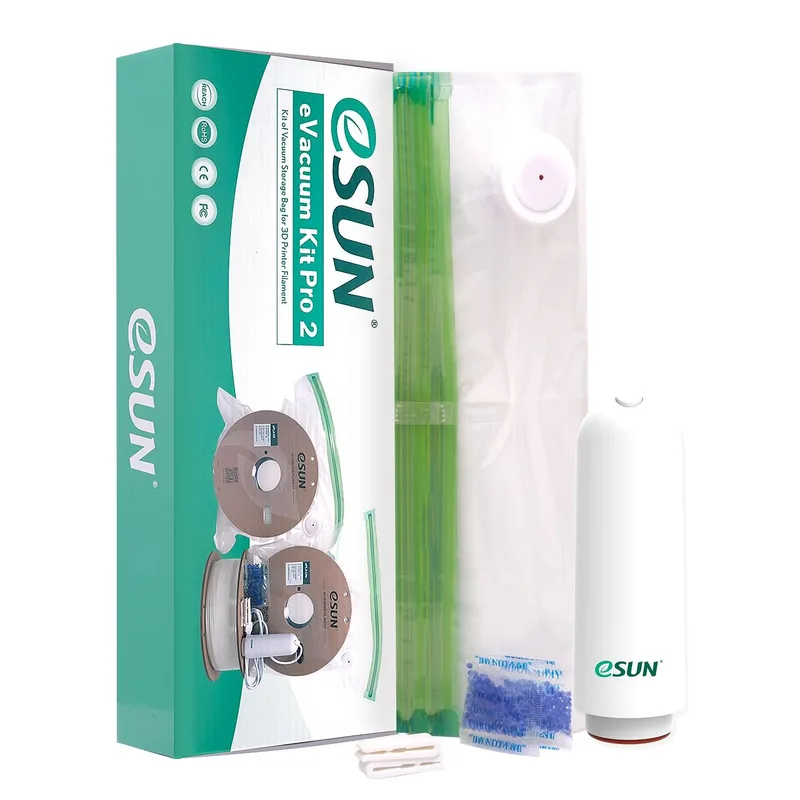
Electric pump · 10 bags
eSUN eVacuum Kit Pro 2
Skip this if: you need a print-through box or your spool still needs drying.
View on Amazon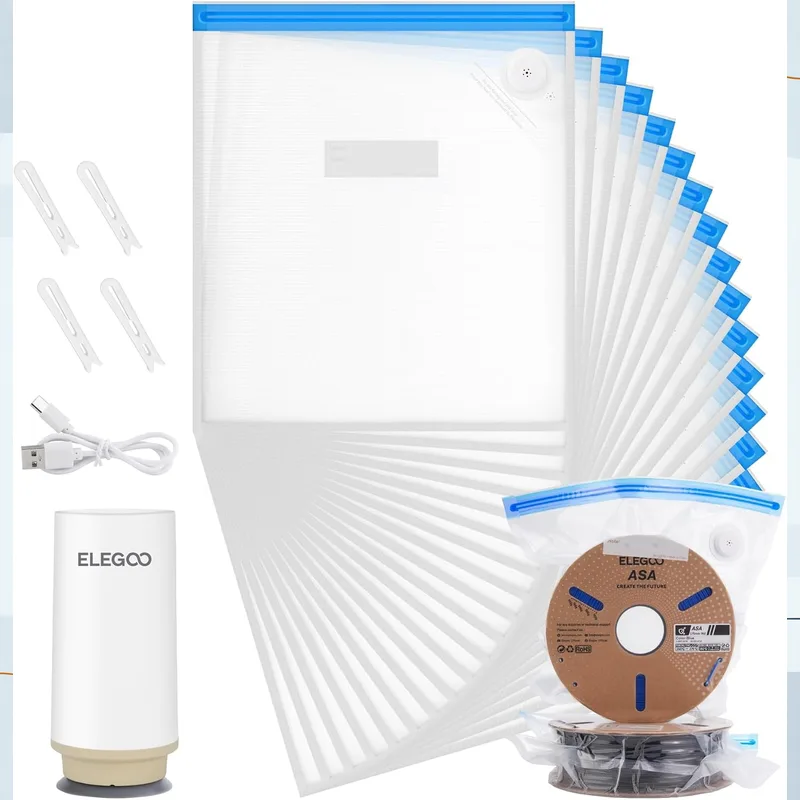
Auto pump · 20 bags
ELEGOO filament vacuum storage kit
Skip this if: your spool is larger than the supported bag or you want print-through storage.
View on Amazon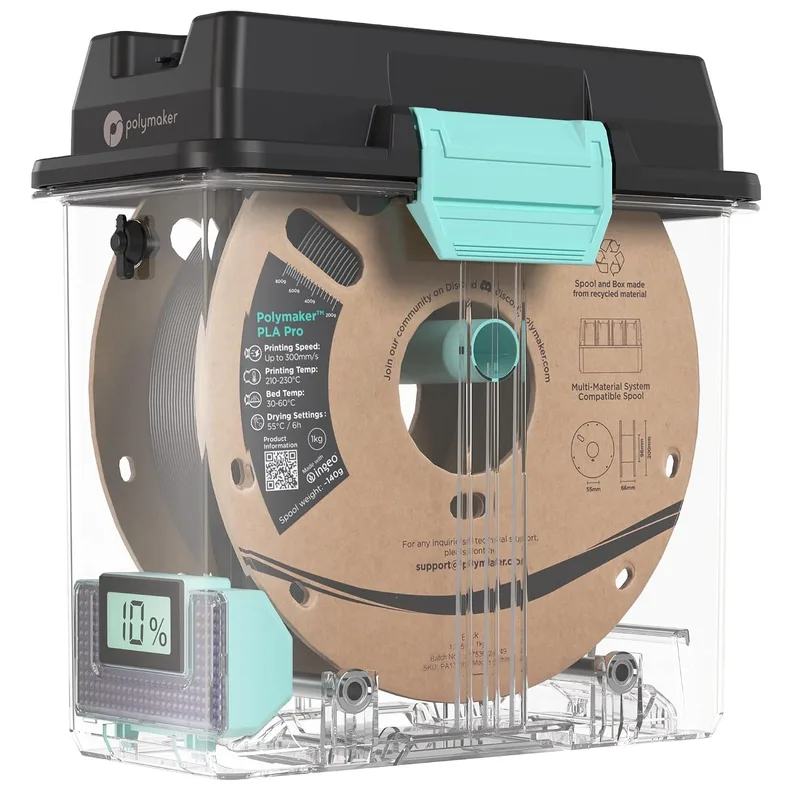
Rigid storage · print-through setup
Polymaker PolyDryer 1 kg storage box
Skip this if: you need an active heater and do not already have a compatible dock.
View on AmazonRecharge silica gel by its own instructions
Desiccant materials and packet wrappers differ. For the silica gel that ships with PolyDryer, Polymaker says to remove the beads from the box, place them in a heat-resistant container, and use an oven at 100–120°C for 1–2 hours until the indicator turns orange. Do not put the PolyDryer box in the oven. That schedule does not automatically apply to other packets or desiccants.
| Desiccant | Manufacturer instruction | Practical limit |
|---|---|---|
| Silica gel supplied with Polymaker PolyDryer | Remove from the box; heat in a heat-resistant container at 100–120°C for 1–2 hours, until orange. | Use the PolyDryer manual for this silica gel only. Keep the box out of the oven. |
| Other silica gel or packets | Use the schedule and temperature limit from that desiccant's manufacturer. | Do not infer a safe temperature from color, packet fabric, or another brand's instructions. |
| Unknown or different desiccant material | Check its material and care instructions before heating. | Do not bake a packet if the maker does not permit regeneration. |
For the exact manual procedure, read the Polymaker PolyDryer user manual. For drying filament before storage, start with the filament dryer guide. If the spool is on cardboard, use the cardboard spool and dryer guide.
Common questions
What temperature should I use to recharge silica gel?
For the silica gel supplied with Polymaker PolyDryer, remove it from the box and use an oven at 100–120°C for 1–2 hours, until the indicator returns to orange. For other desiccants, follow that product's instructions; do not assume the same temperature applies.
Can vacuum bags dry wet filament?
No. Vacuum bags are for storing filament that has already been dried. Use the exact filament maker's drying schedule for a wet spool.
How do I know if a vacuum bag is still sealed?
Inspect the zipper and valve, and look for visible damage to the bag. If the seal or bag is damaged, move the spool to an intact storage container.