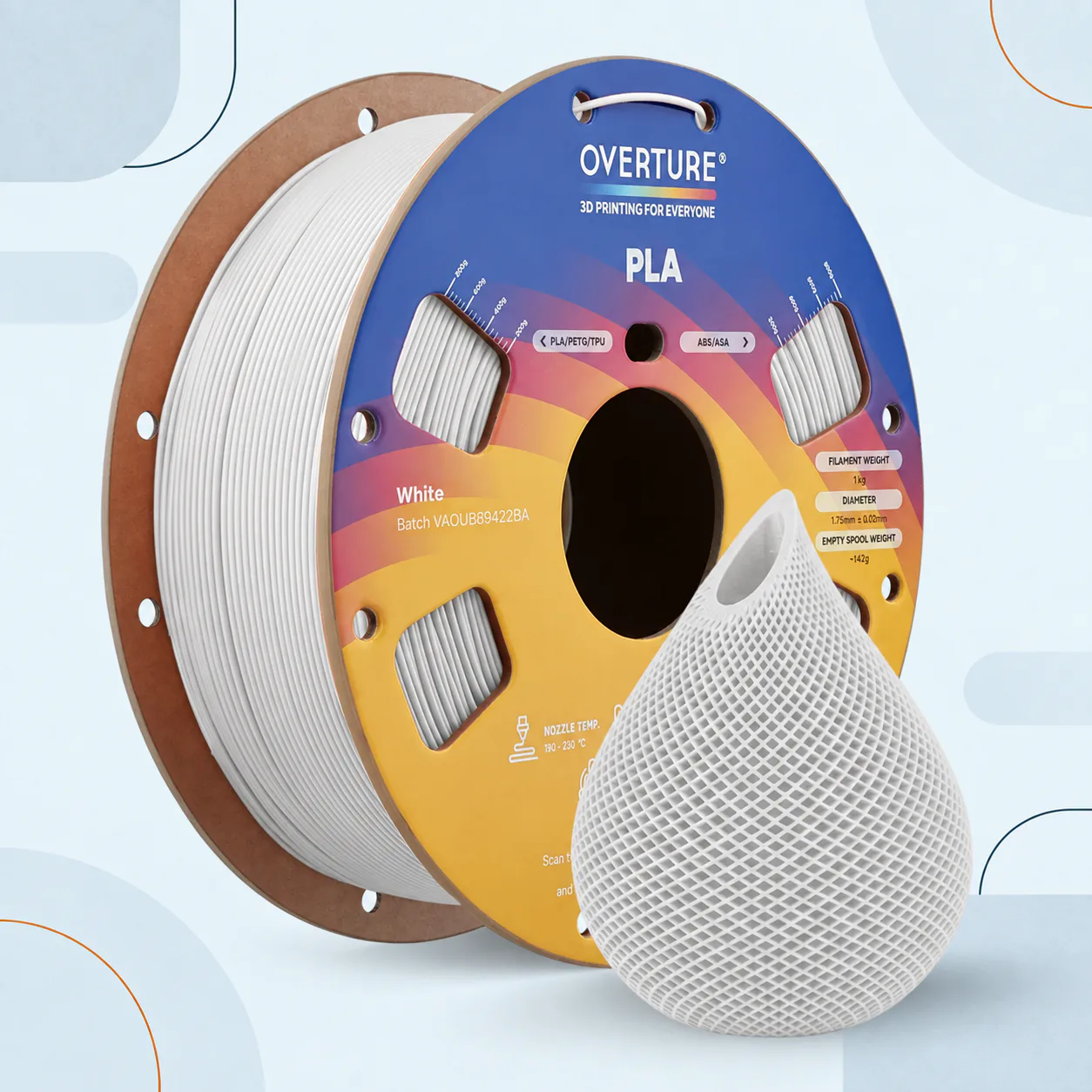
Everyday prints
PLA
For prototypes, models, organizers, and indoor parts where straightforward printing matters most.
PLA settings and spool comparison
Choose by the print job
Start with regular PLA for indoor models and organizers. Move to PETG when a bracket or workshop fixture needs more toughness or warmth tolerance. Use ASA for outdoor UV or summer-car parts when your printer setup can control enclosure and ventilation. Choose TPU 95A for flexible parts, and plan an external feed path for AMS Lite.
Hardware and environment blockers
These are starting points, not universal material ratings. Follow the exact filament, printer, feeder, and build-plate instructions for the setup you have.
| Constraint | PLA | PETG | ASA | TPU 95A |
|---|---|---|---|---|
| Parked car or direct sun | Avoid parts that may see heat near the material's softening range, especially under load. Check the exact product data. | Check the product's heat data and the part's load and geometry; glass transition alone is not a service-temperature limit. | Consider it for outdoor UV or warmer environments only when your printer can support its enclosure and ventilation needs. | Flexibility changes the part's support under load; use material data for the actual temperature and job. |
| Closed Bambu AMS | Measure the exact spool. AMS 2 Pro lists 50–68 mm width and 197–202 mm diameter; follow its manual for cardboard rims. | Check dimensions and the cardboard rim separately from the PETG profile. | Check dimensions and spool condition; the filament's material does not confirm feeder fit. | Ordinary TPU 95A is not the AMS feed choice; use an external path. Bambu's separate AMS-rated TPU is a different product. |
| Bambu AMS Lite | Check 40–68 mm width and 53–58 mm inner hub diameter against the spool you receive. | Measure the actual spool width and hub; cardboard alone does not confirm fit. | Check dimensions and printer limits; an open A1 frame is not an ASA enclosure. | Use an external feed path for ordinary TPU 95A. |
| Open-frame printer in a bedroom or living space | A common starting choice for indoor models; use its exact profile and printer guidance. | Check the printer profile, part geometry, and room setup for the exact product. | Plan an enclosure and ventilation outside occupied sleeping areas; see NIOSH guidance for 3D printing. | Check the feed path and profile; flexible filament may need a printer-specific loading route. |
| Smooth PEI or bare glass | Follow the plate maker's cleaning and release directions; let the part cool as directed. | Can bond strongly to smooth surfaces. Use the plate maker's release instructions to avoid damaging the sheet. | Check the plate maker's release method and the filament instructions for the chosen surface. | Check the plate maker's release method; adhesion depends on the exact surface and filament. |
| Sustained constant load | Account for gradual deformation under load and possible brittleness in the design. | May offer more toughness, but can still creep under a sustained load. | Can suit rigid parts where heat or UV matters, but validate the part's geometry and load. | Use when the part should flex; it is not a substitute for a rigid bracket. |
AMS 2 Pro publishes 50–68 mm width and 197–202 mm diameter; AMS Lite publishes 40–68 mm width and 53–58 mm hub diameter. For cardboard rim and dryer handling, use our cardboard spool guide. Those dimensions describe these named feeders; check the manual for other models.
Four useful starting points
Each page covers the product line, setup requirements, and the conditions that make another material a better fit.
Everyday prints
For prototypes, models, organizers, and indoor parts where straightforward printing matters most.
PLA settings and spool comparison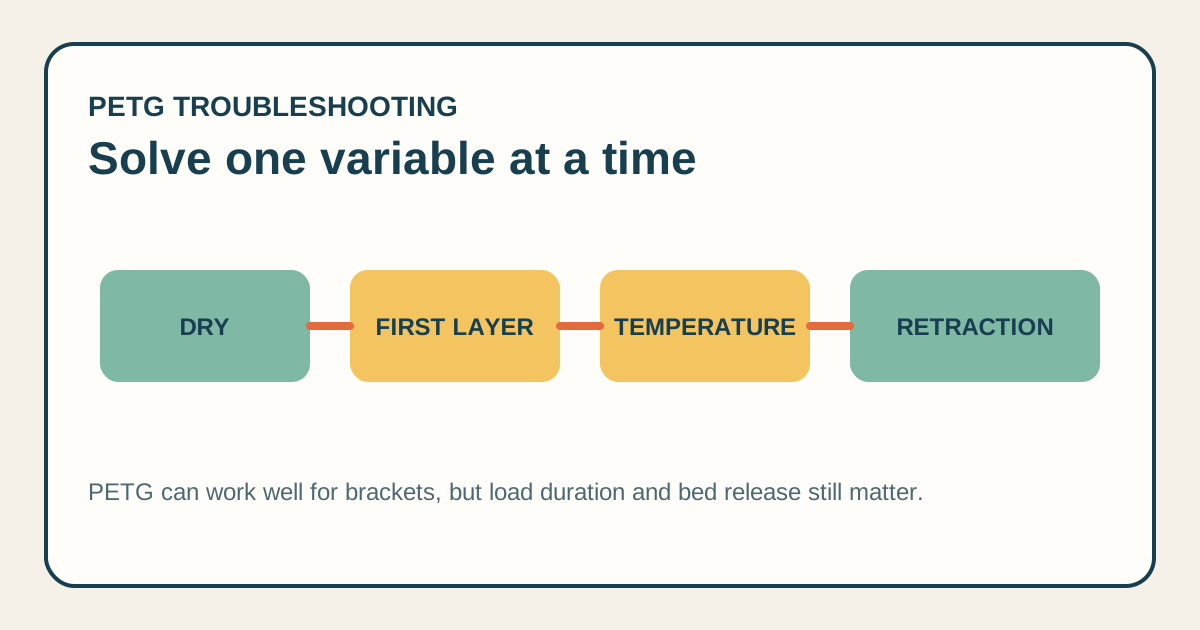
Useful toughness
ELEGOO Rapid PETG settings and cardboard spool fit on Bambu printers.
ELEGOO Rapid PETG settings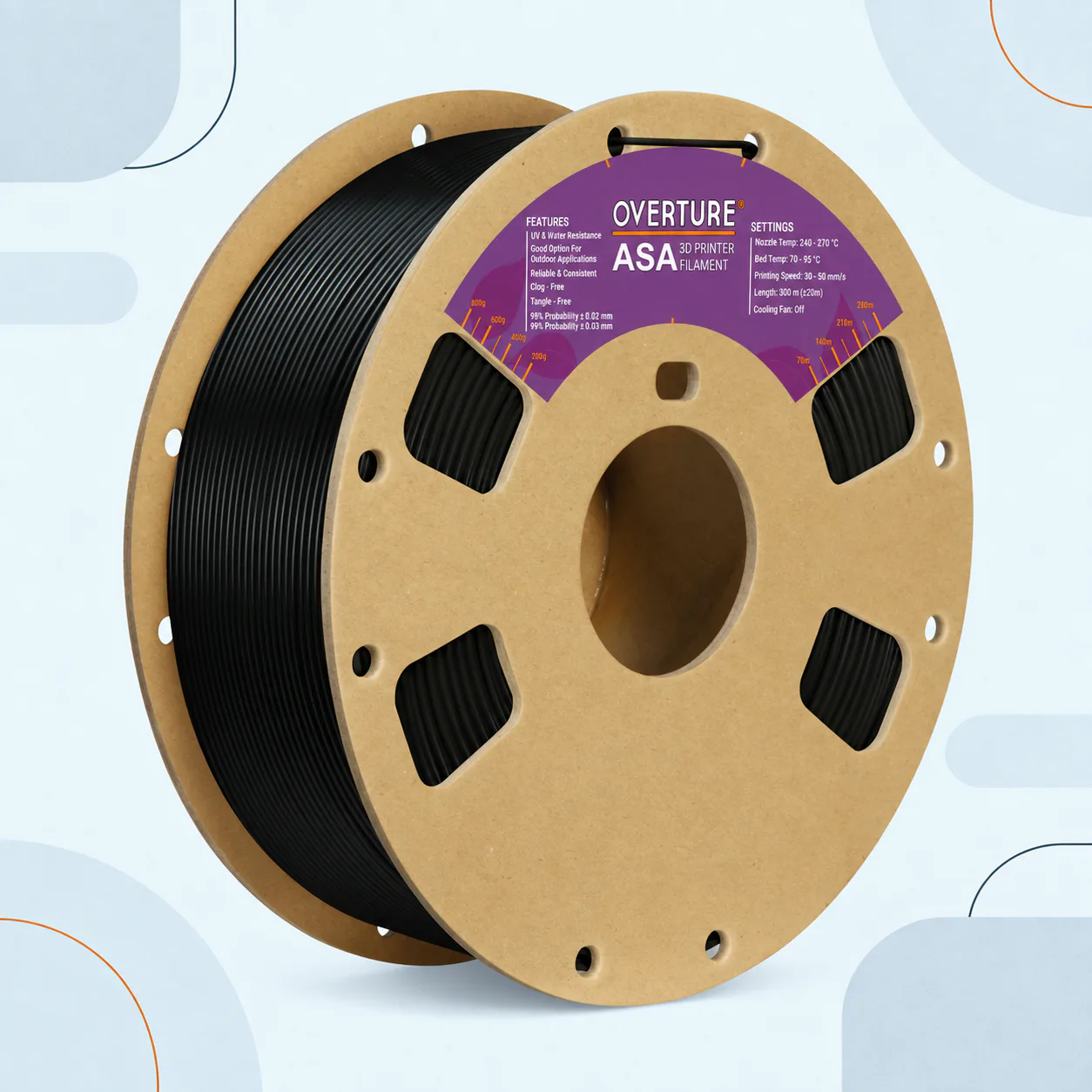
Outdoor parts
For outdoor exposure when enclosure, ventilation, and warping control are part of the setup.
ASA settings and spool comparison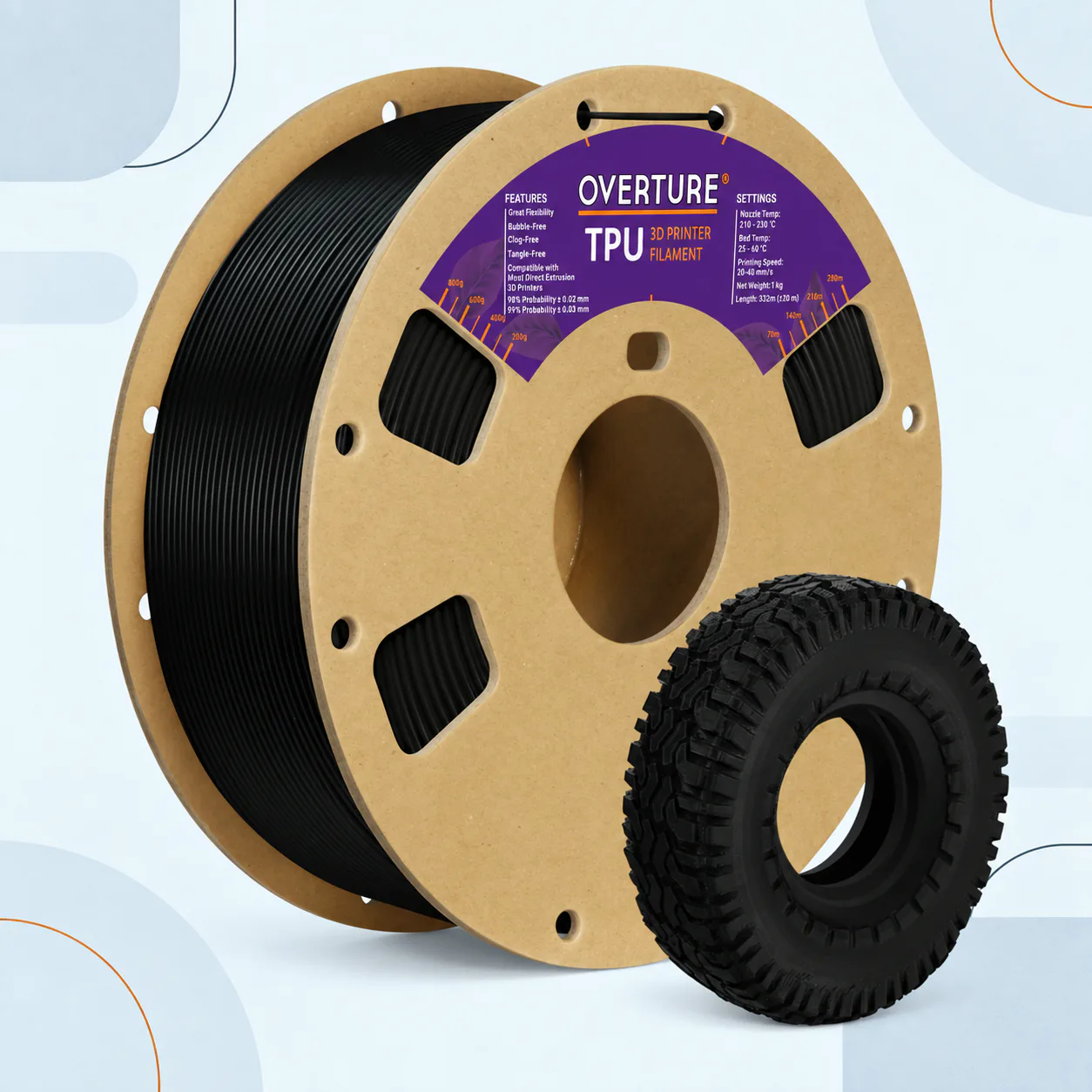
Flexible jobs
For grips, feet, seals, and flexible parts when the feed path can handle soft filament.
AMS and external-feed compatibility table