
Pick your filament by what kills the part first, not by what is easiest to print.
- No-buy / use-what-you-have rule: if your part stays indoors, is not under constant spring tension, and does not need to bend like rubber, do not buy a specialty spool; use the standard PLA already on your rack.
- Spring clips, workshop brackets, and garage jigs: consider PETG when the design needs repeated flex, then check the load and expected temperature.
- Unshaded outdoor fixtures and hot car cabins: consider ASA for heat and UV exposure, provided your printer is enclosed and your workspace supports ventilation.
- Bumpers, vibration dampers, and non-marring feet: consider TPU 95A, using a supported external or low-drag spool path rather than assuming a standard multi-material feeder will accept it.
Buying through our Amazon links costs you nothing extra and helps keep FilamentSetup free. As an Amazon Associate we earn from qualifying purchases. Commission policy.
Quick job-to-spool shortlist
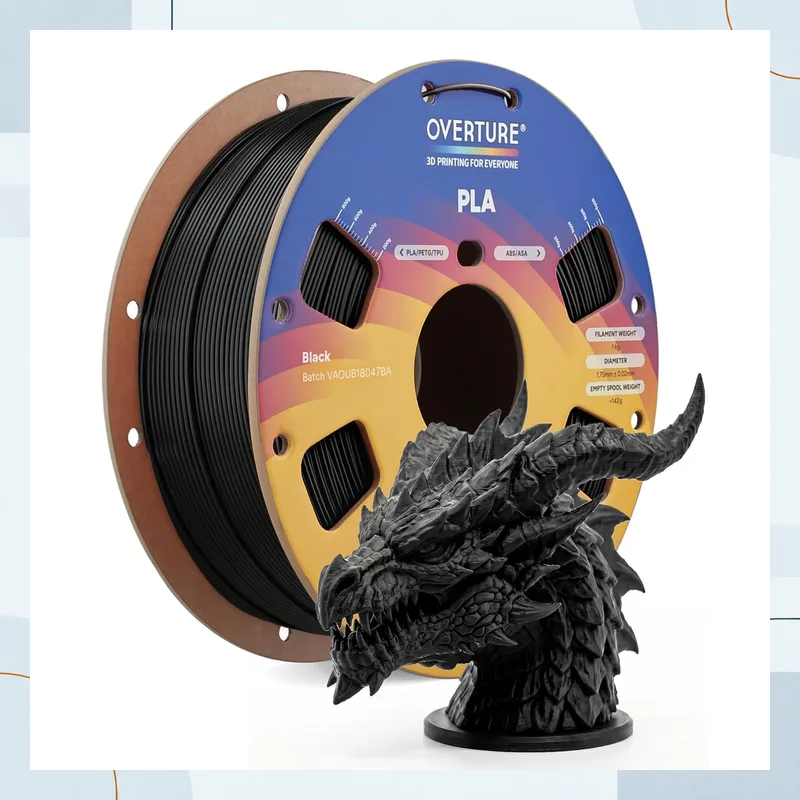
Best for indoor organizers, jigs, and dimensional prototypes
OVERTURE High Speed PLA (1.75 mm, 1 kg)
Skip this if: the exact US child changes brand, model or line, material or capacity, diameter or weight, color, or generation.
View on Amazon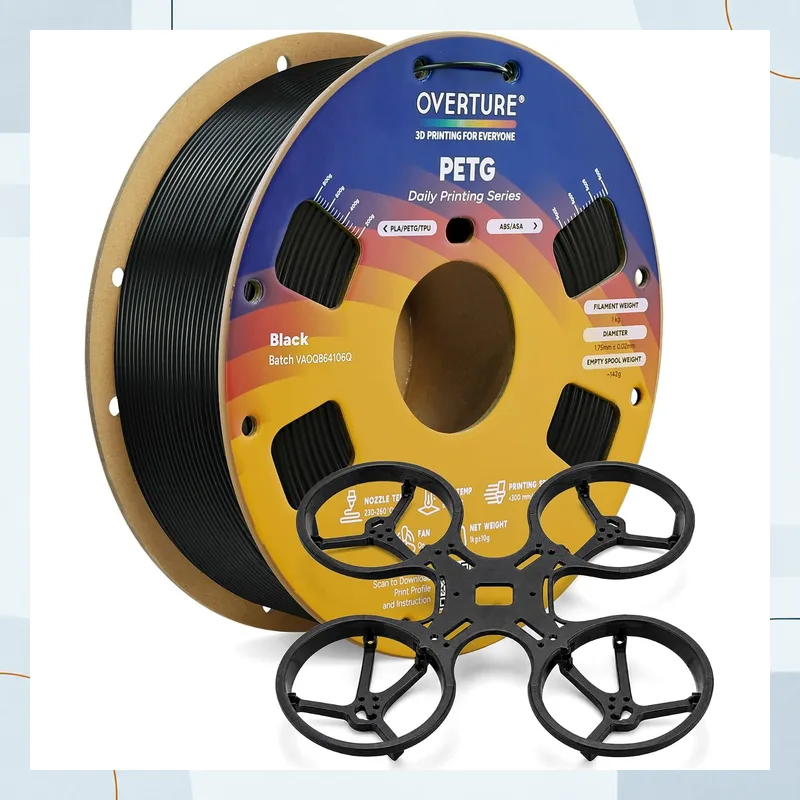
Best for snap-fit clips, workshop brackets, and utility mounts
OVERTURE High Speed PETG (1.75 mm, 1 kg)
Skip this if: the exact US child changes brand, model or line, material or capacity, diameter or weight, color, or generation.
View on Amazon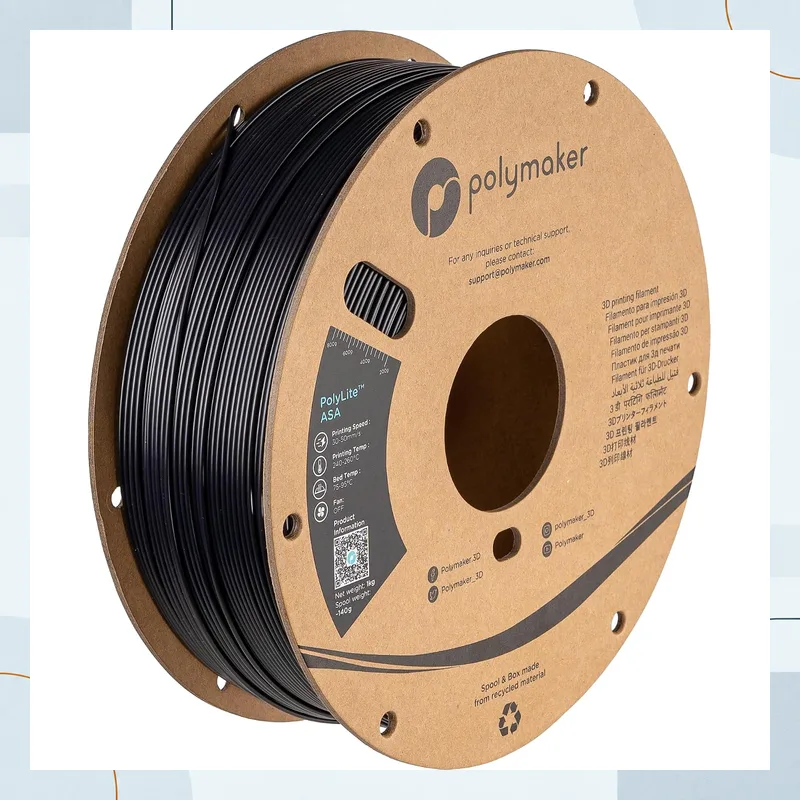
Best for outdoor UV and hot-car parts on an enclosed printer
Polymaker PolyLite ASA, 1.75 mm, 1 kg
Skip this if: the exact US child changes brand, model or line, material or capacity, diameter or weight, color, or generation.
View on Amazon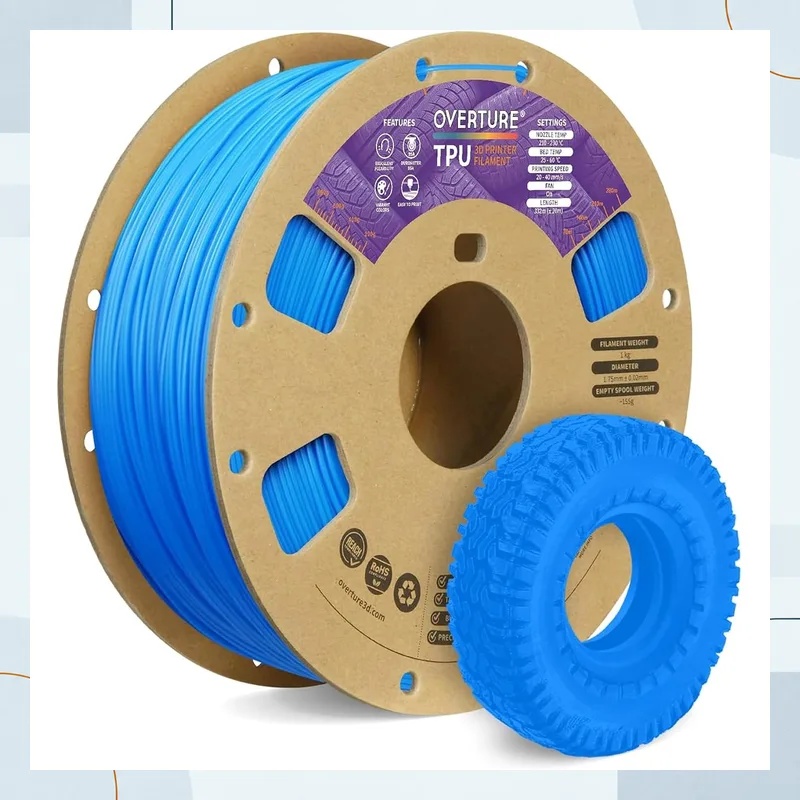
Best for flexible feet, bumpers, seals, and guards
OVERTURE TPU 95A, 1.75 mm, 1 kg
Skip this if: the exact US child changes brand, model or line, material or capacity, diameter or weight, color, or generation.
View on AmazonSituation chooser: match the job to the polymer
| Job | Material to consider | Why | Check before printing |
|---|---|---|---|
| Desk organizers, bins, and models | PLA | Useful for many stiff indoor parts that do not face heat or repeated flex. | Part load, ambient temperature, and the maker's profile. |
| Snap-fit clips, shop hooks, and bottle cages | PETG | Can be a better fit when the design needs some flex. | Repeated strain, sustained load, layer orientation, and temperature. |
| Dashboard parts and outdoor fixtures | ASA | Better suited to heat and UV exposure than standard PLA or PETG. | Actual part temperature, load, printer enclosure, ventilation, and maker's profile. |
| Vibration-damping feet and protective sleeves | TPU 95A | Flexible material can compress and rebound where a rigid plastic cannot. | Feed path, part geometry, and the exact hardness required. |
Constraint deep dives
Constant clamping load versus impact
A part that holds a constant spring or clamping load can deform over time, even when it feels stiff at first. PETG may suit a clip that needs to flex; ASA may suit a part where heat and UV are also concerns. Material alone does not guarantee a safe bracket: geometry, print orientation, temperature, and load still matter.
Room temperature, direct sun, and a parked car
Do not choose a filament from a single generic car-temperature number. Cabin and part temperatures vary with sunlight, shade, color, location, and vehicle. Compare the exact filament maker's heat data and the part's load; read our hot-car interior guide before printing cabin hardware.
When to skip buying new filament
- Skip a specialty spool if the part is a lightly loaded indoor fixture and the PLA you already have meets the job.
- Skip ASA if your printer and room cannot support its enclosure and ventilation requirements; redesign for a lower-demand use or choose another manufacturing route.
Setup completion and read-next guides
- Check feeder, AMS, and spool fit in the printer-path and feeder compatibility guide.
- Compare PLA, PETG, ASA, and TPU 95A setup guidance.
- See how PETG and TPU release from PEI in the build-plate guide.
- Match the spool to a drying schedule in our filament dryer guide.
Common questions
Can I use PETG instead of ASA for outdoor parts?
PETG can suit shaded outdoor parts when its expected temperature and load stay within the exact filament maker’s guidance. For direct sun and long-term UV exposure, ASA is the more suitable choice; check the part, printer, and material requirements.
Why did my PLA bracket snap after two weeks on a shelf?
A PLA part held under constant tension or bending can deform over time and may eventually loosen or fracture. For a repeatedly flexed clip, compare PETG or another material suited to the load, then test the part design.
Can I print flexible bumpers in a Bambu AMS?
Bambu lists generic TPU and TPU 95A as unsupported in its AMS. Feed ordinary TPU 95A through a supported external path, or use a specifically supported material such as Bambu TPU for AMS if its properties suit the part.