
A parked car in direct summer sun can get much hotter than outdoor air. For dashboard mounts, windshield clips, cupholders, and console parts, compare the exact filament data with the part location and load. A loaded mount needs more margin than an unloaded tray.
- PLA: reserve it for low-heat, lightly loaded cabin parts after checking the exact formulation's heat data.
- PETG: consider it for shaded, lower-load parts only when the expected conditions fit the maker's data.
- ASA: consider it for heat and sun exposure, with the enclosure, draft control, ventilation, and printer limits it requires.
Vehicle interiors heat quickly in sunlight; see NHTSA's summer driving guidance. It does not establish a temperature for every dashboard, vent, or printed part. Part location and load still need to be considered.
Buying through our Amazon links costs you nothing extra and helps keep FilamentSetup free. As an Amazon Associate we earn from qualifying purchases. Commission policy.
Shortlist: car-cabin filaments by use
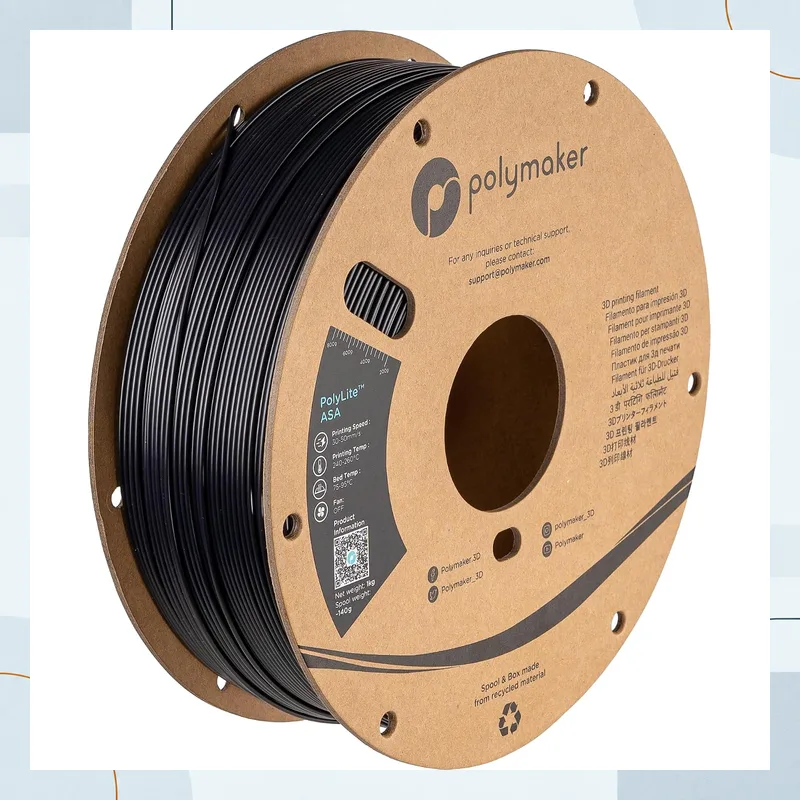
Best for dashboards, windshield mounts, and sun-visor clips
Polymaker PolyLite ASA, 1.75 mm, 1 kg
Skip this if: the exact US child changes brand, model or line, material or capacity, diameter or weight, color, or generation.
View on Amazon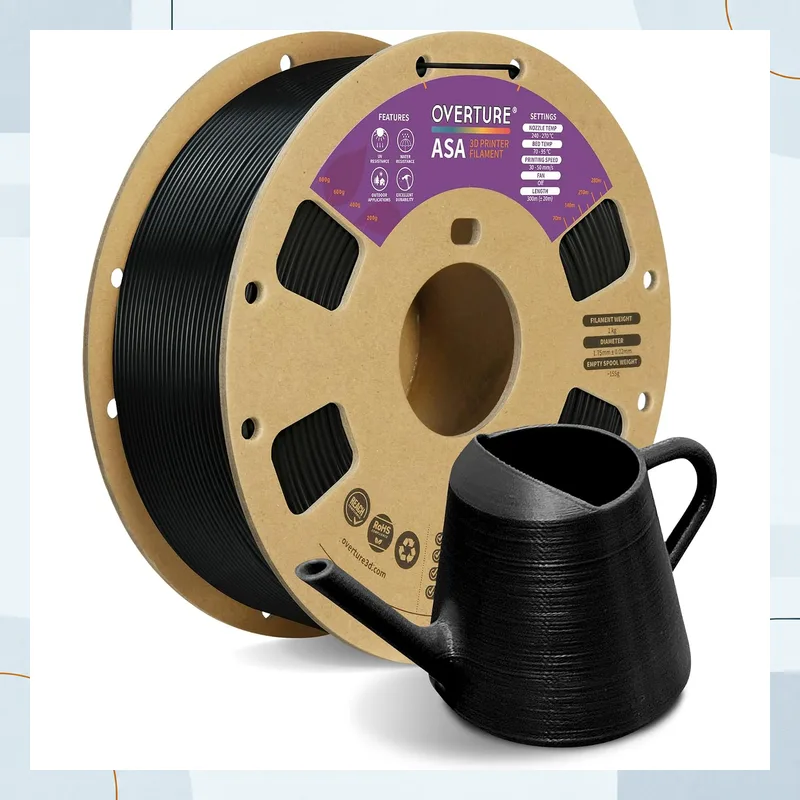
Best alternative high-heat cabin and exterior-trim spool
OVERTURE ASA, 1.75 mm, 1 kg
Skip this if: the exact US child changes brand, model or line, material or capacity, diameter or weight, color, or generation.
View on Amazon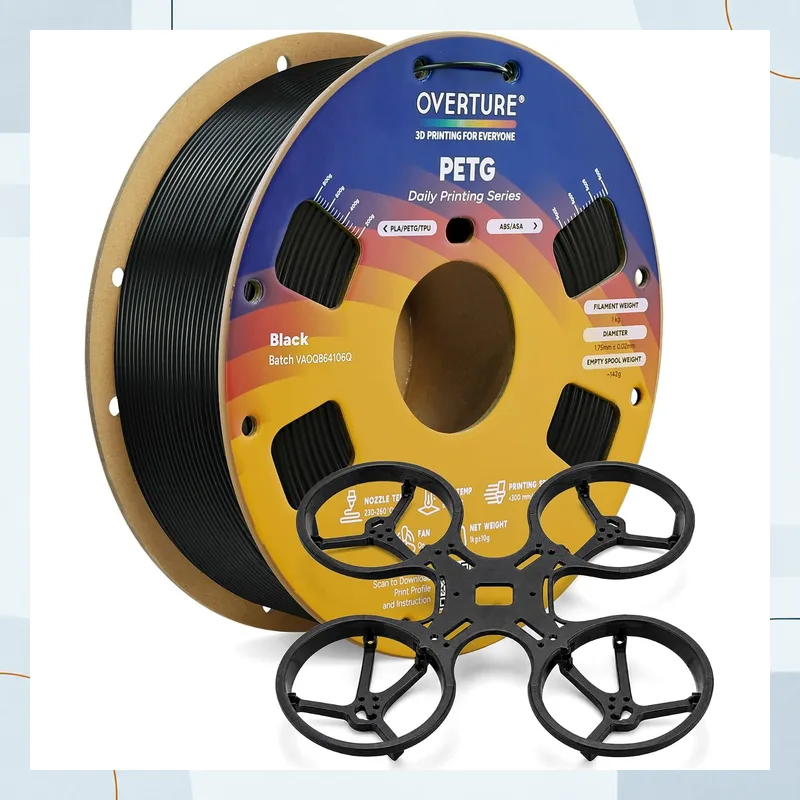
Best open-printer option for shaded, lower-load consoles
OVERTURE High Speed PETG, 1.75 mm, 1 kg
Skip this if: the exact US child changes brand, model or line, material or capacity, diameter or weight, color, or generation.
View on AmazonRead the heat data for the exact filament
Glass transition temperature (Tg), heat deflection temperature (HDT), and Vicat softening temperature are different tests. Their values should not be treated as one shared “safe temperature.” The table shows selected manufacturer values; it does not predict a part's service limit.
| Material and maker | Published value | What the figure means here |
|---|---|---|
| SUNLU PLA | Tg 63°C; HDT 55 ± 5°C at 0.45 MPa | Two different tests from the current SUNLU TDS; not a universal PLA limit. |
| OVERTURE PLA | Vicat 64.2°C | Vicat value from OVERTURE's current TDS; do not equate it with Tg or HDT. |
| SUNLU PETG | Tg 79.4°C; HDT 70 ± 5°C at 0.45 MPa | Maker data for this PETG formulation; part geometry and load still matter. |
| OVERTURE PETG | Vicat 75°C | Vicat value from OVERTURE's TDS; it is not a loaded-part rating. |
| Polymaker PolyLite ASA | Tg 98°C; HDT 100°C at 1.8 MPa and 103°C at 0.45 MPa | Maker data for this ASA formulation, measured at the listed test loads. |
| OVERTURE ASA | Vicat 106.2°C | Vicat value from OVERTURE's TDS; do not compare as if it were a Tg or HDT value. |
Sources: SUNLU PLA TDS, OVERTURE PLA product page and TDS, SUNLU PETG TDS, OVERTURE PETG TDS, Polymaker PolyLite ASA TDS, and OVERTURE ASA TDS.
Car interior chooser by location and load
| Part location | Starting material choice | Decision check |
|---|---|---|
| Upper dashboard and windshield mounts in direct sun | ASA is the stronger starting candidate. | Check local heat, sustained load, part geometry, and printer enclosure and ventilation. Avoid treating a material data point as a safe-use guarantee. |
| Vent clips exposed to hot air or repeated spring force | Use a heat-resistant material suited to repeated flex; ASA may be appropriate if the printer supports it. | Check the vent air temperature, fit, and fatigue risk. A failed clip can release a part while driving. |
| Shaded console trays and low-load organizers | PETG may suit some designs; PLA only if the actual temperature remains within its material margin. | Consider the parked-car conditions, shade, part thickness, and sustained load. |
| Trunk or cargo organizers | PETG or ASA depending on heat, UV, and cargo load. | Check load, abrasion, sun exposure, and the exact filament's heat data. |
Constraint deep dives
Tg versus HDT under load
Tg describes a transition in polymer behavior; HDT measures deflection under a specified load and test method. A part may deform under load before reaching its maker's Tg figure. Review the exact TDS and leave margin for actual part temperature, geometry, and sustained stress.
Sunlight, color, and location
A part in direct sun can run hotter than shaded cabin air, but there is no single temperature increase that applies to every car or color. If your only option is an open-frame printer, keep PETG parts away from high-heat locations and do not rely on a dashboard mount for safety-critical equipment.
When to skip printing car mounts yourself
Skip a printed windshield or dashboard mount if the printer and material cannot meet the expected heat and load with margin. A commercial mount designed for that vehicle and use may be a better fit than a print that could loosen or fail while driving.
Setup completion and read-next guides
- Compare application vetoes in the cross-material job matrix.
- Check enclosure and spool limits in the printer-path compatibility guide.
- Review the ASA setup guide before printing heat-exposed parts.
- Compare PLA and PETG data for other designs.
Common questions
Will PETG melt in a hot car?
A single answer does not fit every PETG part or car. Heat response depends on the exact formulation, test method, part temperature, geometry, and load. Compare the material maker’s data and use a larger safety margin for a loaded dashboard or windshield part.
Why did my PLA cupholder adapter warp inside a closed car?
The part may have reached a temperature above the margin for that PLA formulation, especially under load. Car and part temperatures vary by location, sunlight, and conditions; compare the exact filament data and avoid PLA for heat-exposed parts that must retain their shape.
Can I anneal PLA instead of printing ASA for car parts?
Annealing can raise the heat resistance of some PLA formulations, but the part may change dimensions or shape. Follow the exact filament maker’s instructions and test a sample before relying on an annealed part. ASA may be a better starting material when heat and UV resistance are required and your printer supports it.